
What Constitutes Dog Training Business Marketing?
Dog training business marketing encompasses the strategies and activities used to attract dog owners, build trust, establish credibility, and grow a steady client base. It combines traditional marketing principles with modern digital tactics specifically tailored to the pet services industry, where reputation, results, and personal recommendations heavily influence buying decisions.
Effective dog training marketing bridges the gap between local awareness and online discoverability, helping potential clients find and choose your services when they need them most.
Why Marketing Is Essential for Dog Training Businesses
Dog training is part of a highly competitive local service market. According to the Association of Professional Dog Trainers (APDT), 67% of dog owners research trainers online before making a decision, while 78% read reviews and testimonials before booking services.
This means that even the most skilled trainers can struggle to attract clients without a clear and consistent marketing strategy.
The good news is that a combination of local SEO, content marketing, video content, reviews, partnerships, and paid advertising can dramatically improve visibility and lead generation.
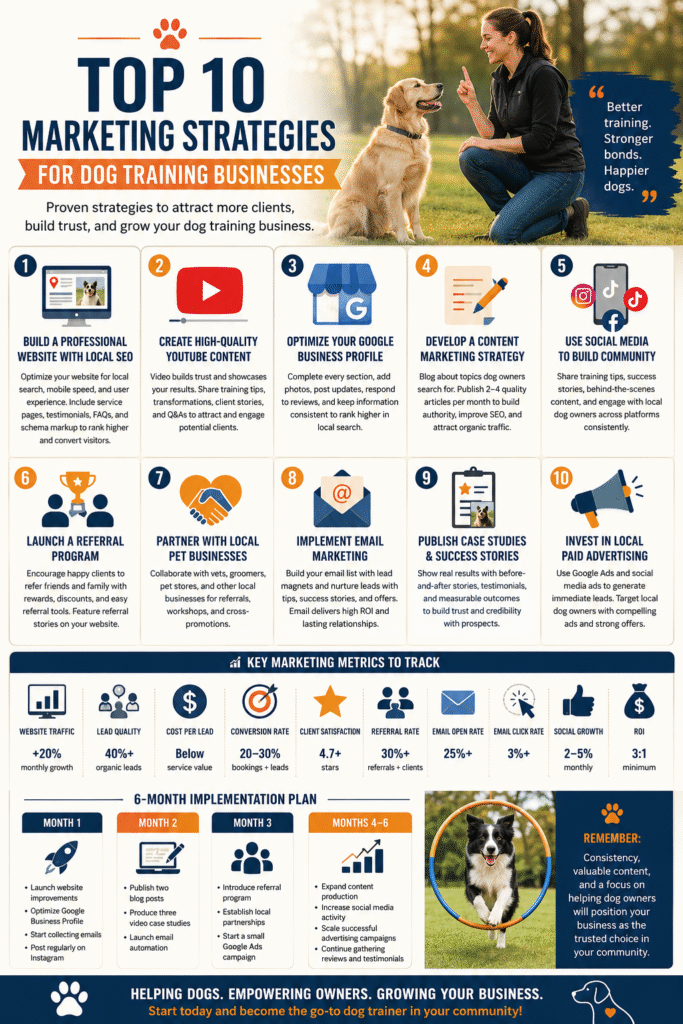
Top 10 Marketing Strategies for Dog Training Businesses
1. Build a Professional Website With Local SEO
Why It Matters
Your website serves as your digital storefront. Local search terms such as:
- Dog trainer near me
- Puppy training in [city]
- Dog obedience classes near me
generate highly qualified leads actively seeking services.
A well-optimized website ensures your business appears when local dog owners are searching.
Action Steps
- Create dedicated pages for:
- Services
- Pricing
- About Us
- Testimonials
- Contact Information
- Fully optimize your Google Business Profile.
- Include location-specific keywords throughout your website.
- Add LocalBusiness and Service schema markup.
- Ensure fast loading speeds on mobile devices.
- Showcase before-and-after training videos.
- Display client success stories.
- Add an FAQ section addressing common concerns.
SEO Tip
Question-based FAQs perform exceptionally well in AI-powered search engines and voice search results.
2. Create High-Quality YouTube Content
Why It Matters
Video is one of the most effective content formats for dog training businesses because it visually demonstrates your methods and results.
Potential clients want proof that your training works.
Content Ideas
- Sit, stay, recall, and leash training demonstrations
- Before-and-after transformation videos
- Solutions for common behavior problems
- Behind-the-scenes training sessions
- Client testimonials
- Live Q&A sessions
YouTube Optimization Tips
- Post consistently.
- Include local keywords in titles.
- Add timestamps and chapters.
- Upload transcripts.
- Organize videos into playlists.
- Link back to your website.
Bonus Benefit
A strong YouTube presence can significantly increase brand visibility across AI search platforms.
3. Optimize Your Google Business Profile
Why It Matters
Google Business Profiles often appear before traditional website listings in local search results.
Many prospective clients will interact with your profile before visiting your website.
Best Practices
- Complete every profile field.
- Upload professional photos regularly.
- Publish weekly updates.
- Respond to all reviews.
- Request reviews from satisfied clients.
- Mention specific dogs and outcomes in responses.
- Add service categories and attributes.
- Display certifications and memberships.
Pro Tip
Maintain consistent business information across your website, social media profiles, and directory listings.
4. Develop a Content Marketing Strategy
Why It Matters
Blog content attracts organic traffic while positioning you as an authority in dog behavior and training.
Many dog owners search for solutions before they search for trainers.
High-Performing Blog Topics
- Puppy training guides
- Breed-specific training advice
- Leash pulling solutions
- Reactive dog training
- Separation anxiety management
- Senior dog training tips
- Training method comparisons
- Cost of dog training
- Case studies and success stories
Recommended Publishing Frequency
Publish 2–4 quality articles per month to maintain visibility and authority.
SEO Best Practices
Each article should include:
- A clear definition near the beginning
- Question-based headings
- Credible sources and citations
- Publication and update dates
- Internal links to related content
5. Use Social Media to Build Community
Why It Matters
Dog-related content consistently performs well across social media platforms.
Social media allows trainers to demonstrate expertise while building trust and engagement.
Instagram Strategy
- Post daily reels.
- Share client success stories.
- Publish behind-the-scenes content.
- Use local hashtags.
- Feature training transformations.
TikTok Strategy
- Create short training tips.
- Use trending audio where appropriate.
- Bust common training myths.
- Share relatable dog behavior content.
- Post consistently.
Facebook Strategy
- Build a private client community.
- Promote blog posts.
- Host live training sessions.
- Run local advertising campaigns.
- Create event listings.
Reddit Strategy
Participate in dog-related communities by providing genuine value and advice rather than direct promotion.
6. Launch a Referral Program
Why It Matters
Referral clients often convert faster and stay longer than clients acquired through advertising.
Dog owners trust recommendations from friends, family, and fellow pet owners.
Referral Program Ideas
- Offer training session credits.
- Provide discounts for successful referrals.
- Create referral cards.
- Develop an online referral portal.
- Use unique referral codes.
- Reward both parties.
Additional Tip
Feature referral stories and testimonials prominently on your website.
7. Partner With Local Pet Businesses
Why It Matters
Strategic partnerships can create mutually beneficial referral networks.
Potential Partners
- Veterinarians
- Pet groomers
- Pet supply stores
- Dog walkers
- Pet sitters
- Animal shelters
- Pet insurance providers
Co-Marketing Opportunities
- Educational workshops
- Joint webinars
- Cross-promotional email campaigns
- Reciprocal website links
- Shared social media campaigns
8. Implement Email Marketing
Why It Matters
Email remains one of the highest ROI marketing channels available.
It allows you to nurture leads and maintain relationships with current and former clients.
Lead Magnet Ideas
- Puppy Training Checklist
- New Dog Owner Guide
- Dog Behavior Problem Solver
- Training Success Blueprint
Email Sequence Structure
Welcome Email
Introduce your philosophy and services.
Educational Email
Share useful training advice.
Social Proof Email
Highlight success stories and testimonials.
Offer Email
Present a consultation or special promotion.
Follow-Up Email
Address common objections and FAQs.
Monthly Newsletter Content
- Training tips
- Success stories
- Seasonal advice
- Upcoming classes
- Promotions
9. Publish Case Studies and Success Stories
Why It Matters
Case studies provide tangible evidence that your methods work.
They also help potential clients envision similar outcomes for their own dogs.
Recommended Structure
Dog Profile
- Name
- Breed
- Age
- Behavioral challenge
Owner Challenges
- Problems experienced
- Previous unsuccessful attempts
Training Plan
- Techniques used
- Duration
- Session frequency
Results
- Specific measurable outcomes
- Time frame
Client Testimonial
- Direct owner quote
Visual Evidence
- Before-and-after photos
- Training videos
Example
A 3-year-old German Shepherd displayed severe resource guarding behavior that resulted in multiple incidents. Through six weeks of structured counterconditioning and desensitization training, the dog achieved reliable, incident-free interactions around food, toys, and household members. The owner reported a significant improvement in confidence and household harmony.
10. Invest in Local Paid Advertising
Why It Matters
Organic marketing takes time. Paid advertising can generate immediate leads.
Google Ads Strategy
Target keywords such as:
- Dog trainer near me
- Puppy training [city]
- Dog obedience classes [city]
- Aggressive dog training [city]
Campaign Best Practices
- Use location extensions.
- Highlight certifications.
- Include clear calls-to-action.
- Create dedicated landing pages.
- Track conversions.
Facebook and Instagram Ads
- Target local dog owners.
- Use video-based ads.
- Showcase transformations.
- Retarget website visitors.
- Create lookalike audiences.
Recommended Starting Budget
- Google Ads: $10–$20 per day
- Facebook/Instagram Ads: $5–$15 per day
Scale campaigns based on lead quality and profitability.
Key Marketing Metrics to Track
| Metric | Tracking Method | Target Goal |
|---|---|---|
| Website Traffic | Google Analytics | +20% monthly growth |
| Lead Quality | CRM Tracking | 40%+ organic leads |
| Cost Per Lead | Ad Spend ÷ Leads | Below service value |
| Conversion Rate | Bookings ÷ Leads | 20–30% |
| Client Satisfaction | Reviews | 4.7+ Stars |
| Referral Rate | Referrals ÷ Clients | 30%+ |
| Email Open Rate | Email Software | 25%+ |
| Email Click Rate | Email Software | 3%+ |
| Social Growth | Platform Analytics | 2–5% monthly |
| ROI | Revenue ÷ Marketing Cost | 3:1 Minimum |
Recommended 6-Month Implementation Plan
Month 1
- Launch website improvements.
- Optimize Google Business Profile.
- Start collecting emails.
- Post regularly on Instagram.
Month 2
- Publish two blog posts.
- Produce three video case studies.
- Launch email automation.
Month 3
- Introduce referral program.
- Establish local partnerships.
- Start a small Google Ads campaign.
Months 4–6
- Expand content production.
- Increase social media activity.
- Scale successful advertising campaigns.
- Continue gathering reviews and testimonials.
Conclusion
The most successful dog training businesses rarely rely on a single marketing channel. Instead, they combine local SEO, video marketing, social media, content creation, strategic partnerships, referral systems, email marketing, and paid advertising into a cohesive growth strategy.
Start by building a strong foundation with a professional website, a fully optimized Google Business Profile, and consistent video content. From there, expand into blogging, social media, referrals, and advertising.
Track performance, refine your approach, and double down on what works.
The dog training industry continues to grow, and with the right marketing strategy in place, your business can become the trusted choice for dog owners actively searching for professional training solutions.
Ready to Grow Your Texas Dog Training Business?
We know dog trainer marketing. And we know exactly what it takes to get your business in front of dog owners who are ready to hire.
Book your free marketing strategy call →
Tell us your city, your services, and your growth goal – and we’ll show you a clear plan to get there.
Published by Barkfluencer – the digital marketing agency built exclusively for dog trainers and pet professionals across the US.